The Woman Who Fixed Prices—and People
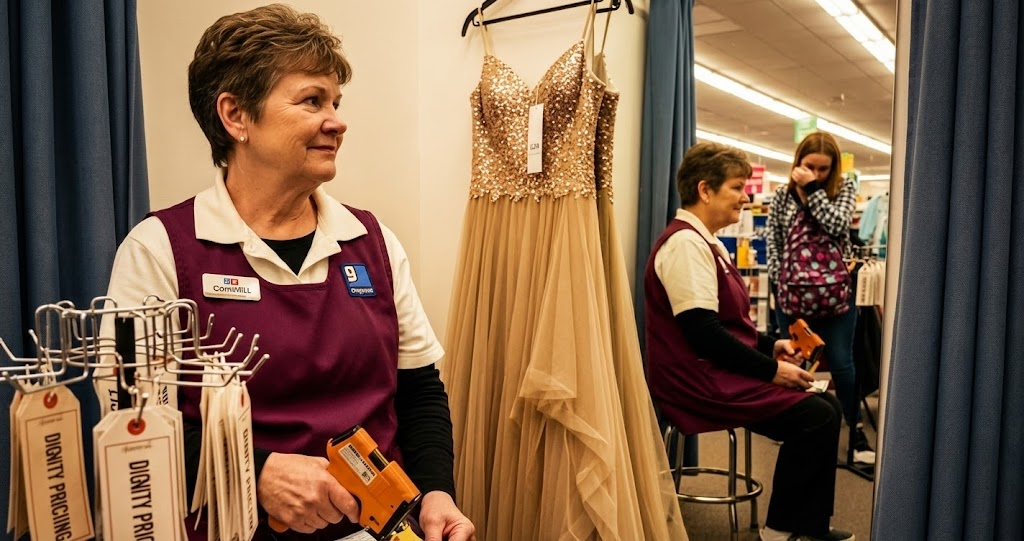
My name is Lorraine. I’m seventy-two years old, and I work the fitting rooms at a Goodwill on Hampton Street. I hand out numbered tags, count hangers, and fold clothes people leave behind. Most days, no one really notices me. I’m just the woman on a stool, watching the door open and close.
But fitting rooms hear things the rest of the store never does.
I once watched a girl—maybe fourteen—try on the same prom dress four different times over three weeks. She never bought it. She would stand in front of the mirror, take a photo, then leave with red eyes and her shoulders folded inward.
The fourth time she came in, I finally spoke.
“That dress loves you,” I said.
She swallowed hard. “I can’t afford it. It’s eighteen dollars. That’s my lunch money for two weeks. My mom doesn’t even know I’m thinking about prom.”
I bought the dress myself. Told her it had been returned damaged and that she could have it for three dollars. She knew I was lying. She took it anyway and cried into the stiff tulle like it was the first safe place she’d found in a while.
After that, I started noticing everything.
The woman choosing an interview suit with a stain because it was cheaper.
The elderly man measuring pants against his waist, then putting back the ones that fit because the smaller size cost less.
The mother quietly switching price tags between jackets when she thought no one was looking—because her son needed a winter coat and she only had enough for a spring one.
So I started doing things I wasn’t supposed to do.
I marked items “damaged” when they weren’t. I swapped tags. I invented sales. I “found” coupons that had never existed. It didn’t cost me anything. It was the store’s money, not mine. But it cost people their pride to leave without what they needed.
Then corporate came.
They audited the store. Found the price inconsistencies. Traced them back to the fitting rooms. To me.
They called me in.
“Lorraine, you’ve been changing prices.”
“Yes.”
“Why?”
“Because the computer says a winter coat is worth fifteen dollars,” I said. “But to a mother watching her son shiver, it’s worth everything. So I make the computer wrong.”
I expected to be fired.
Instead, the auditor—a young woman named Rachel—sat quietly. Then she said, “My mom used to shoplift from Goodwill. We couldn’t afford even thrift store prices. She got arrested when I was eight. That record followed her for years. We stayed poor because she tried not to be.”
She closed her laptop.
“I’m not reporting this,” she said. “But teach me. Teach me which prices matter.”
What started in one fitting room grew into something bigger. A way to lower prices quietly, without questions. A way to let dignity come before data.
That girl wore her prom dress. She graduated. Now she comes back every year during prom season with dresses to donate—for girls like she once was.
I still sit on my stool, counting hangers in a room that smells like old fabric and other people’s lives.
And I’ve learned this: poverty forces impossible choices. Sometimes the cruelest one is leaving behind something that fits because a number says you can’t afford it.
So I make the computer lie.In the name of dignity.
One dress at a time.