The Man Who Refused to Let Winter Win
My name is Albert. I’m 68 years old, and for most of my life, I’ve driven the same heating oil route through rural Pennsylvania. Two hundred houses. Same roads. Same turns. Same families. I’ve been doing it so long that I don’t need a map—I know which driveway floods when it rains and which porch light flickers in the cold.
Winter here isn’t poetic. It’s ruthless. When a house runs out of oil, the temperature inside drops fast. Pipes freeze. Fingers go numb. Sleep becomes impossible. Heat isn’t comfort here—it’s survival.
After twenty-three years on the route, I learned how to read the signs. I could tell when people were struggling just by how long it had been since their last delivery. Orders that used to come every six weeks suddenly stretched to ten… then fourteen.
That’s how I noticed Mrs. Kowalski on Ridgeway Road.
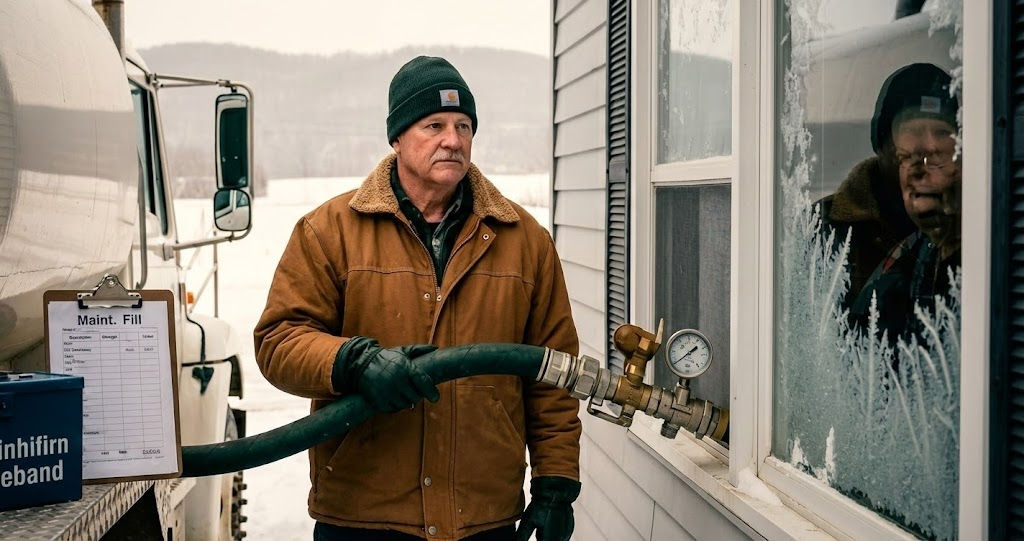
She was an older woman, always polite, always paid on time. Then last winter, her orders stopped. I drove past her house and saw frost lining the inside of the windows. No smoke from the vent. I knew what that meant.
I knocked on her door. She opened it just a crack—didn’t want to let the cold in, because there was no heat to lose.
“You need oil,” I told her. “It’s twelve degrees out.”
She shook her head. Said her check hadn’t come yet. Said she’d manage. People always say that when they’re trying to survive quietly.
I filled her tank anyway. Two hundred gallons. Didn’t ask permission. Just did it.
The next day, she called the office crying. Said she couldn’t pay.
I told her to pay me when she could. Or not at all. Because no one should freeze over money.
After that, I couldn’t unsee it. Houses I’d served for decades suddenly stretching deliveries. Families living in one heated room. Elderly folks choosing between groceries and warmth.
So I started doing something I wasn’t supposed to.
When someone waited too long, I delivered anyway. I wrote it down as a partial fill, a maintenance check—details no one ever looked at. Most of the cost came out of my commission. Some came out of my savings.
That winter, I gave away around twelve thousand dollars’ worth of oil.
In March, Mrs. Kowalski came to see me. She tried to pay me back. When I refused, she pressed three hundred dollars into my hand.
“For the next person who’s cold,” she said.
I kept that money in my truck. When someone couldn’t pay, I used it. When someone insisted on paying me back, the money went right back into the fund. It grew. Others heard about it. Drivers in other states started doing the same.
I’m still driving that tanker truck through snow and ice.
And I’ve learned this: heat is not a luxury. It’s the difference between making it through the night and not. Winter doesn’t care about your bank account—but people should.