In 1939, flour sacks were never meant to be beautiful.
They were plain. Rough. Practical. Made only to carry food from mill to home. Once emptied, they were supposed to be thrown away—or reused quietly, without notice.
But mothers noticed something else.
Across struggling households, especially during hard times, poor women began turning those empty flour sacks into clothing for their children. With careful hands, they washed the fabric, cut around the printed logos, and stitched shirts, dresses, and pajamas from what little they had.
It wasn’t fashion.
It was survival.
Children wore those clothes to school. To church. Into the world. And though the fabric carried the marks of poverty, it also carried love—hours of work, creativity, and care sewn into every seam.
The flour mills eventually noticed too.
Instead of ignoring what was happening—or discouraging it—some companies made a quiet decision. If families were going to use the sacks as clothing, then the sacks should be worthy of being worn.
So they changed them.
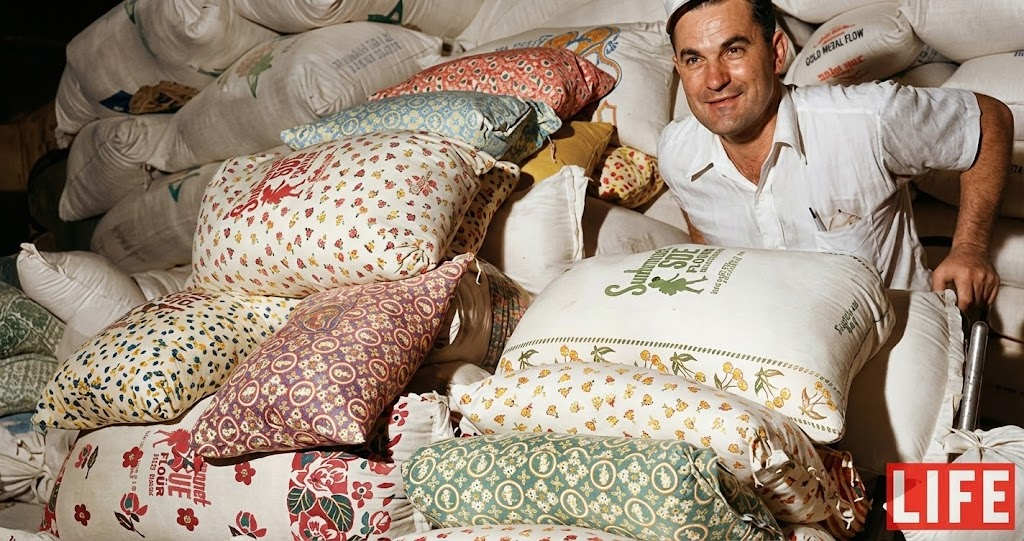
Logos were moved to the edges. Ink became easier to wash out. And then something remarkable happened: flour sacks began to appear in floral prints, soft patterns, cheerful colors.
Not to sell more flour.
But to give children something better to wear.
A sack of flour could now become a dress with flowers. A shirt that didn’t shout scarcity. A small piece of dignity in a world that offered very little of it.
No press releases.
No applause.
Just a simple act of humanity.
For many families, those patterned sacks meant a child could walk outside feeling a little more like everyone else. It meant poverty didn’t have to look so harsh. It meant someone, somewhere, had noticed—and cared.
Today, those dresses are preserved in museums. But their real legacy isn’t fabric.It’s the reminder that compassion doesn’t always come loudly.
Sometimes, it arrives quietly—printed on a flour sack, stitched by a mother, worn by a child who deserved better.