
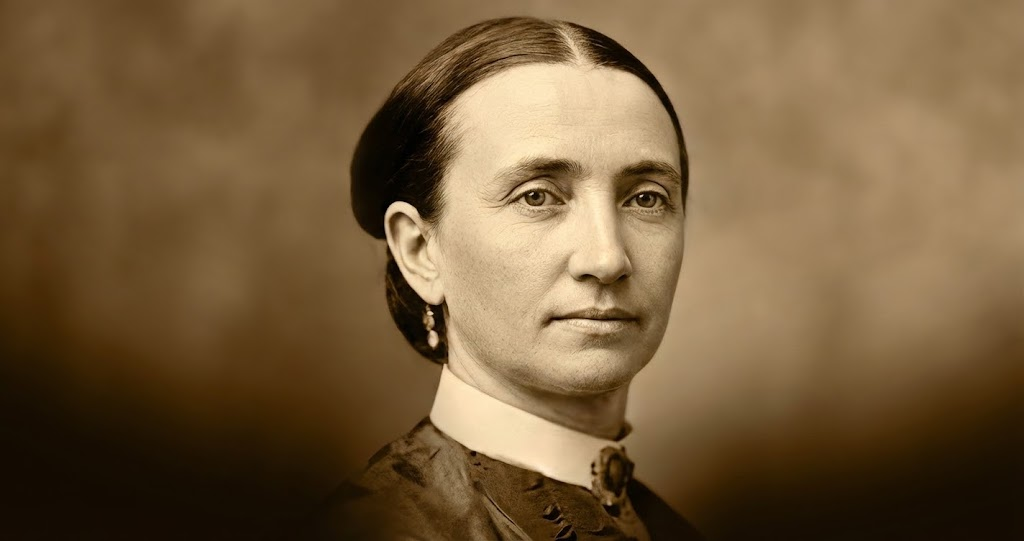
In 1856, in a country still deciding what women were allowed to be, **Kate Warne** walked into the Chicago office of the **Pinkerton National Detective Agency** with calm confidence. She was a young widow with no political power, no money, and no protection—only an idea. When she asked for a job as a detective, the men laughed. Women, they said, could not do investigative work. Kate didn’t argue emotionally. She argued intelligently. She explained that women noticed what men ignored, that men talked freely around women, and that secrets lived in conversations never meant to be overheard by other men.
Her reasoning stopped the room. Against every social rule of the mid-19th century, agency founder **Allan Pinkerton** made a decision that would quietly reshape American history. He hired her—not as a secretary, but as a detective. Kate didn’t waste the opportunity. She went undercover immediately, blending into spaces men could never enter. She posed as a socialite, a fortune teller, a confidante. She listened, observed, and remembered. Her power wasn’t force—it was psychological precision. Where brute authority failed, trust succeeded.
Kate proved so effective that Pinkerton created the first Women’s Detective Bureau in the United States—and placed her in charge. This was unheard of. A woman leading detectives in an era when women couldn’t vote or hold office. She trained others, refined undercover methods, and demonstrated again and again that intelligence work required perception, not muscle. Her success wasn’t loud. It was devastatingly efficient. And then, in early 1861, her work intersected with history in a way few ever would.
In February of that year, Pinkerton uncovered credible intelligence of an assassination plot against President-elect **Abraham Lincoln** during his journey to Washington, D.C. The danger was immediate. Lincoln was stubborn, refusing to alter his public travel plans. That refusal could have ended everything. Kate was sent to Baltimore undercover, posing as a Southern sympathizer. She attended gatherings, listened carefully, earned trust, and confirmed every detail of the plot. The threat was real. Lincoln’s life hung on secrecy.
When persuasion failed, Pinkerton made a risky choice: Lincoln would travel in disguise. Quietly. At night. And Kate Warne would personally oversee his safety. She stayed alert through every stop, every transfer, every moment that could expose them. No mistakes. No second chances. On the morning of February 23, 1861, Lincoln arrived safely in Washington. The assassination plot collapsed. The Civil War unfolded as history remembers it—not because of speeches or armies, but because one woman refused to be dismissed.
Kate continued serving throughout the Civil War, taking on espionage missions that placed her directly in harm’s way. She trained other women, expanded intelligence operations, and proved repeatedly that courage and competence were not limited by gender. Yet recognition never followed her the way it followed men. In 1868, Kate Warne died at just 34 years old. In only twelve years, she accomplished what most never do in a lifetime. She was buried in the Pinkerton family vault—an honor rarely given, deeply earned.
For more than a century, her name faded from textbooks. But her impact never disappeared. Every woman told she doesn’t belong, every woman who walks into rooms she was never invited into, every woman who refuses to accept “no” as the final answer—walks a path Kate Warne opened in 1856. She didn’t wait for permission. She didn’t wait for society to catch up. She walked through a door they said was closed and rewrote history on the other side. This isn’t just a story. It’s a blueprint.