
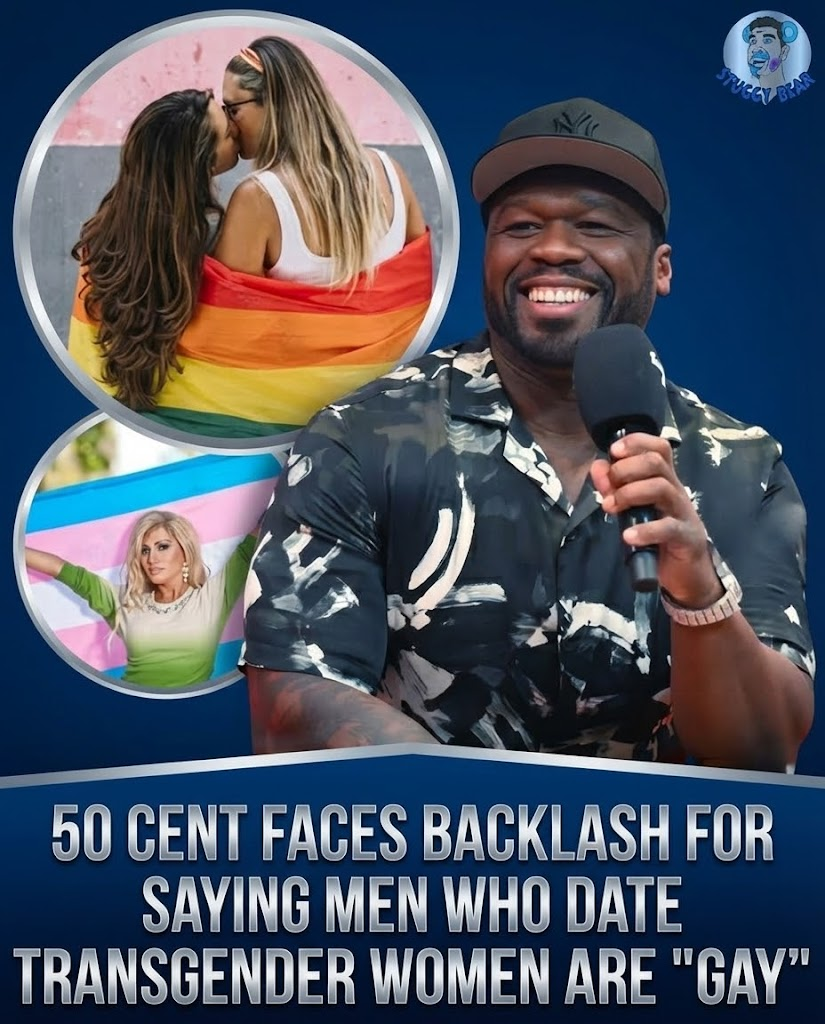
The internet has a long memory, and once again, an old remark has found its way back into public conversation. This time, it’s a controversial statement made years ago by 50 Cent, resurfacing and igniting fresh debate across social media platforms. The rapper had previously claimed that men who date transgender women are “gay,” a sentence that, even at the time, struck many as dismissive and harmful. Now, in a very different cultural moment, those words are being examined with renewed intensity.
When the comment first appeared, it sparked immediate backlash from LGBTQ+ advocates and allies who argued it reinforced harmful stereotypes and misunderstandings about gender identity. Critics pointed out that equating attraction to transgender women with sexuality labels ignored the lived realities of trans people and reduced complex identities to oversimplified judgments. Supporters of 50 Cent, however, defended him by framing the remark as “just an opinion,” igniting a familiar debate about free speech versus social responsibility that continues to divide audiences today.
What makes the resurfacing significant is how much public discourse has shifted since the comment was first made. Conversations around gender identity, sexuality, and respect have evolved rapidly, especially online. Language that once went relatively unchecked is now scrutinized through a more informed and empathetic lens. As a result, many people encountering the quote for the first time are reacting with shock, while others see it as evidence of how deeply ingrained misconceptions still are, even among influential public figures.
Social media has amplified the discussion far beyond its original scope. Some users are calling for accountability, arguing that celebrities should address past statements that cause harm, even years later. Others question whether revisiting old comments leads to growth or simply fuels outrage cycles that benefit algorithms more than communities. In the middle are those who see the moment as a teaching opportunity—a chance to explain why such statements are hurtful and how understanding of gender and attraction has progressed.
For transgender women and their partners, the debate is not theoretical. Many have shared personal stories describing how comments like these contribute to stigma, harassment, and erasure. They argue that public figures wield enormous influence, and words spoken casually can validate prejudice in everyday life. Each resurfaced quote, they say, is a reminder that acceptance is still fragile and that visibility often comes with the burden of constant defense.
Ultimately, the renewed controversy says as much about society as it does about the rapper himself. It highlights the tension between past norms and present values, and the challenge of reconciling them in a digital age that never forgets. Whether 50 Cent chooses to address the remark again or not, the conversation it has sparked underscores a larger truth: words don’t disappear just because time passes. They wait—and when they return, they ask us who we’ve become since they were first spoken.