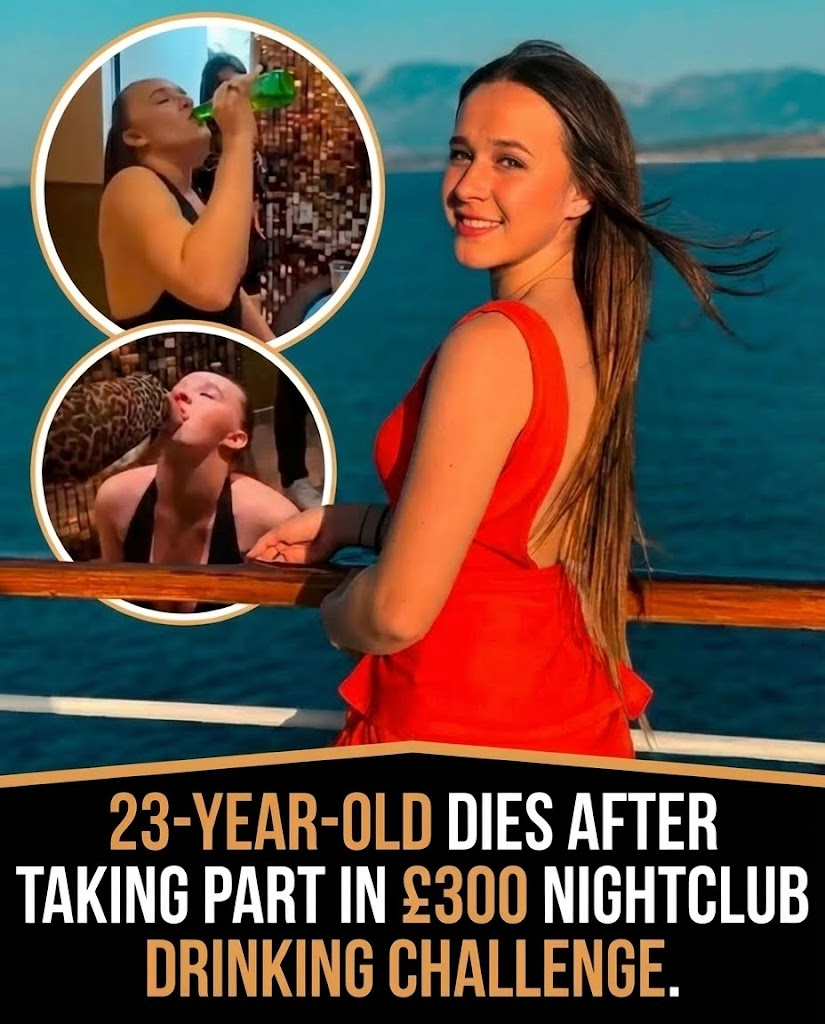
The night was supposed to be joyful. A birthday celebration inside a nightclub, music loud, friends laughing, phones out, memories being made. She was only 23 years old, surrounded by people who cared about her, marking another year of life. No one arrived expecting tragedy. What began as harmless fun slowly shifted into something dangerous, unnoticed in the moment but irreversible in consequence. By the end of the night, a young woman was gone, and a celebration meant to honor life became a reminder of how fragile it truly is.
The challenge itself was part of the party atmosphere. A £300 drinking challenge—something framed as bold, daring, and exciting—encouraged excessive alcohol consumption in a short amount of time. Friends watched, cheered, and trusted that nothing serious could happen. Drinking games have become normalized, especially in nightlife culture, where limits are blurred and risks are downplayed. In that environment, stopping doesn’t feel heroic. Continuing does. And that dangerous mindset can silence warning signs until it’s far too late.
As alcohol levels rose, the body quietly began to lose control. Excessive drinking can overwhelm the system faster than people realize, shutting down vital functions and causing alcohol poisoning. What looks like “handling it well” can mask a medical emergency unfolding beneath the surface. Friends may not recognize the difference between drunkenness and distress. Laughter covers concern. Music drowns out instinct. By the time something feels wrong, precious minutes may already be lost.
Emergency services were eventually involved, but the damage had already been done. Despite efforts to help her, the young woman could not be saved. Her death sent shockwaves through her family, friends, and community—people now forced to replay the night in their minds, wondering what could have been done differently. For those who loved her, birthdays will never feel the same again. One decision, made in seconds, left a lifetime of grief behind.
This tragedy has reignited conversations about the dangers of extreme drinking challenges and the responsibility shared by venues, peers, and society as a whole. High-risk drinking games are often treated as entertainment, but the consequences can be deadly. Alcohol is not harmless simply because it’s legal or socially accepted. Encouraging someone to push past their limits is not support—it’s a gamble with their life, whether intended or not.
Her story now stands as a warning no one wanted to learn this way. Fun should never require proving endurance, risking health, or ignoring boundaries. Celebration should never end in silence. Remembering her means learning from what happened and choosing care over pressure, awareness over applause. One life lost is one too many—and no prize, no money, no moment of excitement is ever worth that cost.