
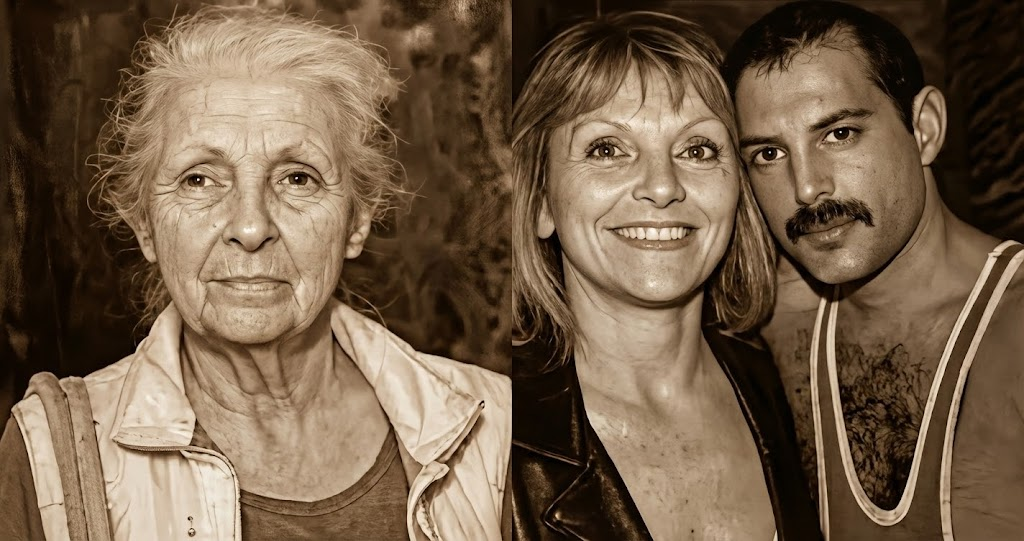
Long before stadium lights, platinum records, and the name Freddie Mercury echoed across the world,
there was a small London flat, shared dreams, and a quiet woman named Mary Austin. They met in the early 1970s when life was uncertain and money was scarce. Freddie was creative, restless, and searching for something bigger than himself. Mary worked, supported him, and believed in him when belief was all they had. Their love grew before fame ever arrived, rooted not in applause but in survival, trust, and shared struggle.
As Queen rose to international stardom, their romantic relationship changed, but their bond did not weaken. Freddie was honest with Mary about who he was, and she accepted him without bitterness or judgment. While the world saw extravagance and spectacle, Mary knew the man behind the persona—the vulnerable, funny, complicated soul who needed grounding. Freddie often said Mary understood him better than anyone else alive. Even when their lives took different paths, he called her his “common-law wife,” a title that reflected loyalty rather than romance.
Fame can fracture relationships, but theirs endured because it was built on something deeper than desire. Mary never chased attention, never sold stories, never tried to step into the spotlight beside him. She protected his privacy fiercely, especially as media curiosity intensified. In return, Freddie trusted her completely. She was present through triumphs and heartbreaks, celebrating sold-out shows and quietly supporting him during moments the public never saw. When success surrounded him with crowds, Mary remained the one place where he could still be simply Freddie.
In the late 1980s, when Freddie was diagnosed with AIDS, his circle grew smaller and more guarded. Fear, stigma, and silence surrounded the illness, but Mary never wavered. She stood by him not as a caretaker chasing recognition, but as a constant presence offering dignity and calm. In his most fragile moments, she provided something no fame could—normalcy. They talked about ordinary things, laughed about the past, and remembered life before the world demanded pieces of him. That quiet companionship mattered more than words.
As his health declined, Freddie made deliberate decisions about his legacy. He wanted to ensure that what mattered most would be protected by someone who loved him for who he truly was. When he passed away in November 1991, he left Mary his beloved home, Garden Lodge, along with half his wealth, future royalties, and his most treasured personal possessions. This was not an impulsive gesture. It was the final expression of trust, gratitude, and enduring love.
Mary later shared that Freddie promised she would be “looked after,” and he kept that promise. But beyond financial security, the inheritance carried emotional weight. Garden Lodge was filled with shared memories, laughter, private conversations, and moments when fame faded into the background. Freddie knew Mary would protect his legacy, not exploit it. And she did exactly that—honoring his wishes, maintaining his privacy, and never turning his life into a spectacle.
Their story reminds us that love does not always follow traditional paths. It can evolve, shift, and change shape without losing its depth. Freddie Mercury left much of his world to Mary Austin not because of obligation, but because she was there before the fame, during the chaos, and at the very end. In doing so, he showed the world that the greatest love stories are often the quietest ones—built on loyalty, respect, and an unbreakable bond that time and circumstance could never erase. ❤️