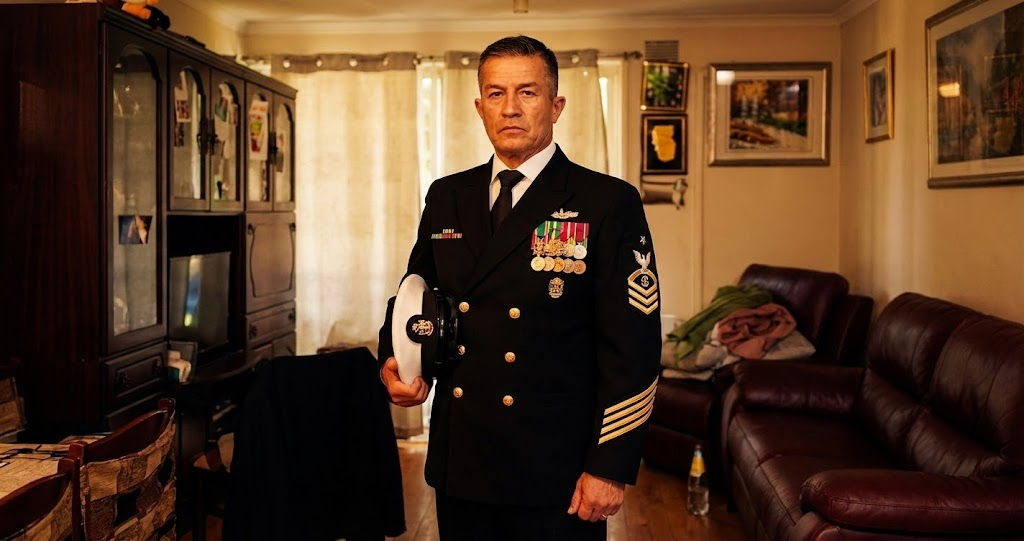
He stood there in silence as the words hit him—words that were meant to shame, to divide, to erase. Someone told him it was disgraceful for a Native American to wear the uniform of the United States. That his service did not belong. That his loyalty was somehow a betrayal of his blood. But he did not lower his head. He did not step back. He is a veteran of the United States Navy, and he is Apache. And in that moment, he understood something deeply painful and deeply powerful: some people still believe identity must be a choice. He knows it never was.
His roots trace back to the Mescalero Apache Tribe, through his grandfather, through generations who survived attempts to erase them. The Apache people endured broken treaties, forced removals, and cultural destruction—yet they are still here. Still standing. Still proud. For him, being Apache is not a costume or a slogan. It is memory. It is blood. It is resilience passed down through stories and silence alike. And it is exactly that history of survival that shaped the man who chose to serve.
When he put on the uniform, he did not forget who he was. He carried his ancestors with him. Native Americans have served in every American conflict, often in higher numbers per capita than any other group. They served even when they were denied citizenship. Even when their languages were outlawed. Even when the nation they defended did not fully defend them in return. Service, for many Native people, was never about blind loyalty—it was about protecting home, family, and future. The values were already there long before any flag was raised.
The accusation—that wearing the uniform was disgraceful—cut deep because it ignored truth. It ignored the reality that identity is layered, not divided. He is not half Apache and half American. He is fully both. The same hands that honor tribal traditions also saluted the flag. The same heart that remembers injustice also believes in responsibility. His service was not an act of forgetting the past. It was an act of shaping the future—one where Native children see themselves as both rooted and respected.
To tell a Native veteran that he does not belong is to misunderstand sacrifice. It is to erase the thousands who fought, bled, and died while carrying histories far older than the nation itself. It is to pretend that America is a single story, instead of many voices woven together. This veteran does not deny the pain of history. He carries it. But he refuses to let that pain define the limits of his identity. He chooses pride over permission.
His response was simple, because the truth often is. He is Apache. He is American. No one gets to take either from him. Not ignorance. Not judgment. Not the false idea that honoring one part of yourself means betraying another. He stands as proof that strength does not come from choosing sides—it comes from standing whole.
And in that wholeness lies something powerful. A reminder that patriotism does not require erasure. That service does not cancel ancestry. That the uniform does not overwrite identity—it carries it forward. His presence alone challenges outdated thinking, not with anger, but with existence. He does not need approval. He has history behind him and honor within him. And that is more than enough.