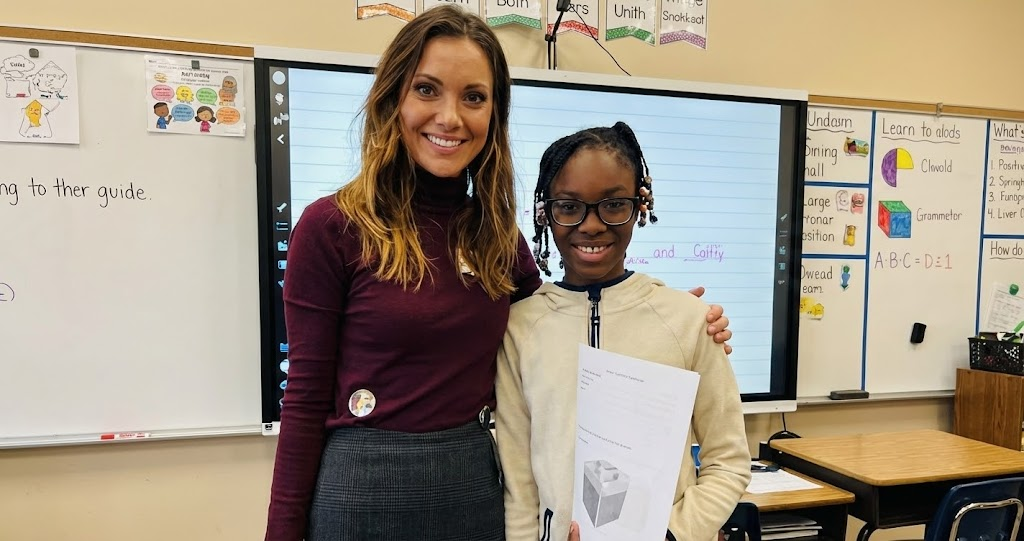
The windows stayed shut most days at her Connecticut school. The air felt heavy. Coughs echoed across the classroom. Desks sat empty again and again as friends stayed home sick. For most children, it was just how school felt.
But not for nine-year-old Eniola Shokunbi.
She noticed patterns. She noticed who kept missing class. She noticed how the room felt worse when the air didn’t move. And she quietly wondered why this had to be normal.
Then her teacher gave an assignment: design a solution for future pandemics.
While other students sketched ideas, Eniola started researching. She learned how viruses travel through the air. She discovered something surprisingly simple — homemade air filtration systems made from box fans and furnace filters, already being used in high-level buildings to clean indoor air.
Most kids would have stopped there.
Eniola didn’t.
She picked up a pen and wrote a letter to a scientist at the University of Connecticut. In careful handwriting, she asked one clear question: could they help her build one of these filters for her classroom?
When the letter was opened, it didn’t get ignored. It got answered — with action.
Scientists didn’t just send instructions. They came to the school. Together with Eniola and her fifth-grade classmates, they built a box-shaped air filter decorated with wings and a beak to match the school mascot. They named it Owl Force One.
It cost about $60.
It took 40 minutes to build.
But no one knew if it would really work.
So researchers took the student-built filter to a federal testing lab. It went through the same process used for expensive commercial systems. The results stunned everyone: the homemade filter removed nearly all infectious respiratory particles from the air within an hour — performing as well as systems costing thousands.
Eniola didn’t stop with proof.
She presented the data. She spoke to school leaders. She stood beside state officials and explained something simple but powerful: expensive solutions leave schools behind. Affordable ones don’t.
In 2024, the state approved $11.5 million to bring these air filtration systems into schools statewide.
All of it started with a child noticing her friends were getting sick — and believing her voice mattered.