Grief does not arrive gently. It crashes in, uninvited, and takes what it wants. For John Travolta, it came more than once—and each time, it took something irreplaceable.
He lost his wife, Kelly Preston, to breast cancer. A partner, a confidant, the center of his private world. Long before that, he had already buried a son. Jett was only sixteen when an epileptic seizure ended his life. No parent is built to survive that kind of loss. No words can prepare you for outliving your child.
Travolta has spoken quietly about that pain. Not dramatically. Not for sympathy. Just honestly. The kind of pain that leaves a permanent echo. The kind that changes how you breathe.
And yet—he stayed.
Not because he was unbreakable. But because two lives still looked to him for safety, warmth, and love.
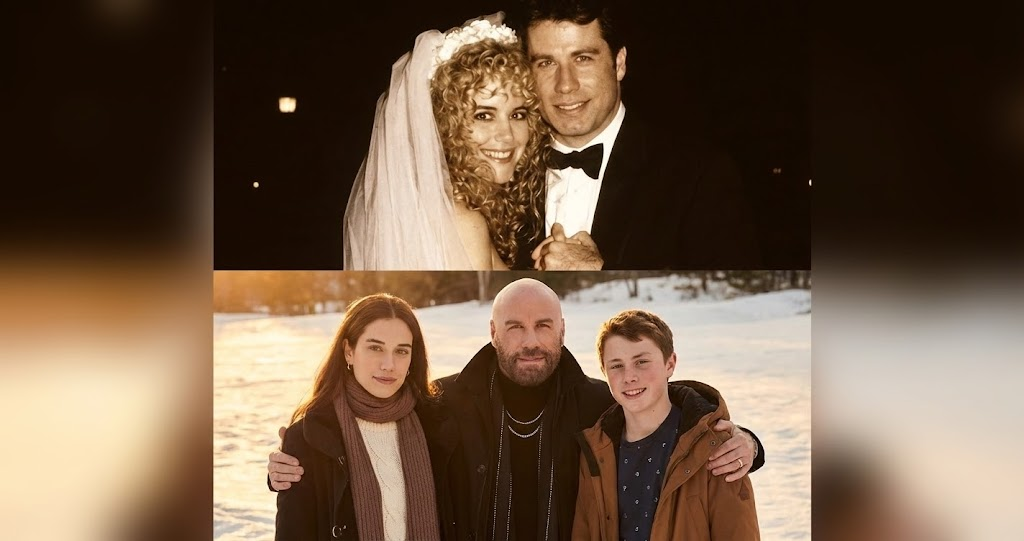
Ella Bleu was growing up when everything began to fall apart. Raised in the public eye, she carried expectations she never asked for. But she grew into herself with grace—thoughtful, grounded, quietly strong. In her presence, Travolta saw something powerful: proof that love planted in good soil can survive even the harshest storms. Every milestone she reached reminded him that life, even fractured, could still grow something beautiful.
Then came Benjamin.
Born when grief was still fresh, when the house felt too quiet, when hope felt like a dangerous thing to trust again. Benjamin didn’t fix the pain. But he softened it. He brought laughter back into rooms that had forgotten its sound. He brought routine, bedtime stories, small hands reaching for reassurance. He brought light—not loud or dramatic, but steady.
Together, the three of them rebuilt something fragile and sacred.
Not the past.
Not what was lost.
But meaning.
They learned to live with absence without letting it hollow them out. To carry memory without drowning in it. To let love remain active, not frozen in grief.
Travolta has said his children are his compass. And it’s clear why. When everything else was taken, they became the reason he stood up each morning. The reason he kept moving forward—not healed, but present.
Because sometimes survival doesn’t look like strength.
Sometimes it looks like choosing to stay.
One day at a time.
With a heart that’s been broken—
but still beating.