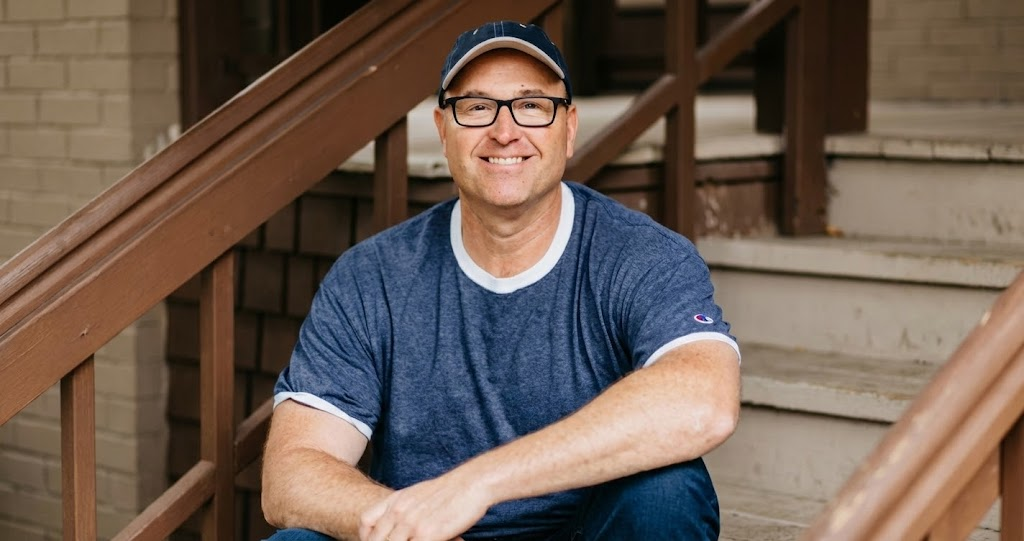
When Rob Kenney was fourteen years old, his father gathered the family together and said something that would permanently split Rob’s life into before and after. He didn’t shout. He didn’t argue. He simply said he didn’t want to be a parent anymore—and then he walked away.
Rob’s mother was struggling with alcoholism, and with his father gone, there was nowhere stable for him to land. He moved in with his older brother Rick, who had just gotten married and was living in a small mobile home with barely enough space for himself, let alone a teenage boy trying to survive emotional whiplash. Overnight, Rob went from being a kid to figuring things out alone.
There was no one to teach him the quiet basics of growing up. No father to show him how to shave without cutting his face. No one to explain how to fix a leaking sink, change a tire, or tie a tie before a big moment. More than that, there was no voice telling him he was doing okay—that he mattered.
That absence leaves a mark. It can harden people. It can turn into anger, bitterness, or distance. Rob felt all of that—but he made a decision early on. If he ever became a father, he would not disappear. He would be present in every way his own father wasn’t.
Years passed. Rob built a life piece by piece. He became a husband, then a father to two children of his own. He showed up. He taught. He listened. He stayed. And when his children grew up and left home, Rob felt proud—but also strangely aware of something else.
There were so many people like him.
Adults who never learned the basics because no one was there to teach them. People who carried quiet embarrassment about things they were “supposed” to know. People who didn’t just miss instructions—but missed having a dad.
In 2020, sitting in his garage during the stillness of the pandemic, Rob turned on a camera and recorded a simple video. How to unclog a sink. Then another. How to check your car’s oil. How to iron a shirt. How to shave.
But what people felt wasn’t just information.
It was comfort.
Rob spoke calmly. He cracked gentle, corny dad jokes. He encouraged viewers like they were standing right in front of him. “You’re doing great,” he’d say. “Proud of you.”
Millions of people listened—and many cried.
Not because they didn’t know how to tie a tie, but because no one had ever stood patiently beside them and shown them how.
Letters and comments poured in. People called him “Dad.” They thanked him for being the father figure they never had. They told him his videos helped them feel less alone in the world.
Rob never set out to replace anyone. He simply showed up—because he knew what it felt like when no one did.
Before his father passed away, Rob chose forgiveness. Not because the past didn’t hurt—but because he refused to let it define him.
Some people pass their pain forward.
Rob Kenney turned his into something steady, kind, and quietly life-changing.