
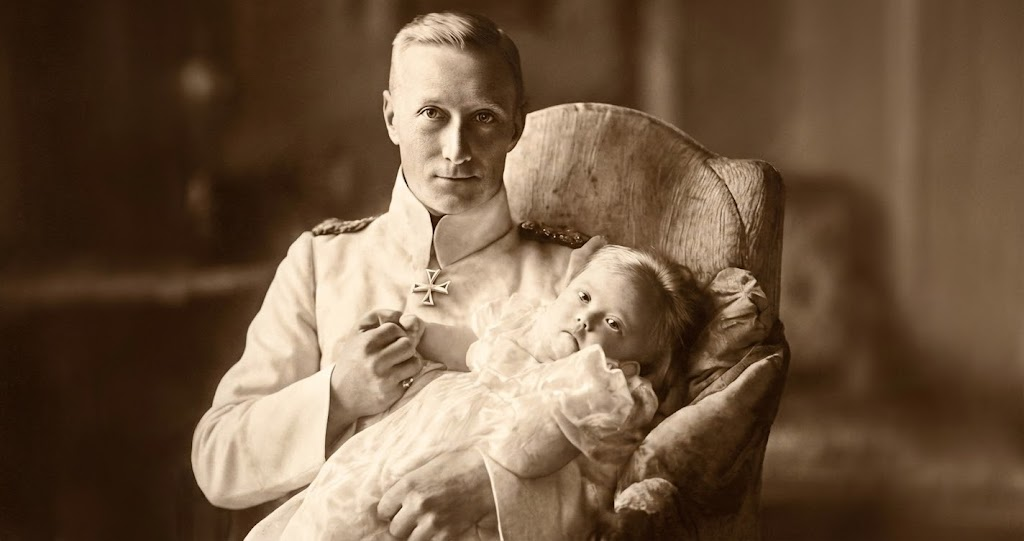
In 1915, at a time when silence was the usual response to difference, a child was born into one of Europe’s most powerful royal houses and was seen, named, and loved without apology. Princess Alexandrine Irene of Prussia, known affectionately as Adini, entered the world carrying a condition most families—especially royal ones—worked desperately to conceal. In that era, disability was treated as shame, something to be locked behind palace doors. But from the very beginning, Alexandrine’s life unfolded differently. She was not erased. She was acknowledged. And in a world built on appearances, that quiet choice mattered more than anyone could have known at the time.
Alexandrine was the eldest daughter of Crown Prince Wilhelm and Princess Cecilie of Mecklenburg-Schwerin, born into a lineage obsessed with image, duty, and legacy. Yet inside the walls of her family’s home, love overruled convention. Instead of hiding her away, her parents embraced her presence. They spoke her name publicly. They allowed her to be photographed, to attend gatherings, to exist openly as their daughter. In doing so, they challenged a rigid social code without ever making a speech. Their defiance was quiet—but it was unmistakable.
Nicknamed Adini, Alexandrine grew up surrounded by affection rather than secrecy. Her mother, in particular, became her fiercest protector, determined that her daughter would live with dignity, not pity. Alexandrine received an education suited to her abilities and was included in daily routines, meals, walks, and celebrations. She was not treated as an embarrassment to be managed, but as a family member to be cherished. At public events, she appeared alongside her relatives, her presence signaling something radical for the time: that worth was not conditional on perfection.
This visibility was extraordinary in early 20th-century aristocratic society. Many noble families quietly removed children with disabilities from public life, sending them to distant institutions or hidden estates. Alexandrine’s continued presence disrupted that pattern. Without protest or slogans, her life itself became a contradiction to prevailing prejudice. She showed that joy could coexist with difference, that a royal household could function with compassion rather than denial. People saw her, and because they saw her, they were forced—perhaps for the first time—to reconsider what dignity truly looked like.
Alexandrine lived most of her life closely connected to her family, especially her mother, with whom she remained until 1954. Her days were described as calm and steady, filled with familiar rhythms rather than grand expectations. There were no political ambitions attached to her name, no pressure to perform. Instead, her life was defined by warmth, routine, and belonging. In a century marked by wars, collapses of empires, and cruelty justified by ideology, her quiet existence stood as a gentle refusal to dehumanize.
She passed away in 1980 at the age of 65, having lived far longer—and far more openly—than many like her were ever allowed. Alexandrine did not leave behind treaties or monuments, but she left something far more enduring: an example. Her life proved that acceptance does not require permission from society, only courage from those closest to us. Long before inclusion became a movement or a word, it was practiced in her home, in simple, everyday ways that reshaped lives quietly but permanently.
Today, Alexandrine’s story resonates because it feels both historical and urgently modern. She reminds us that progress often begins not with laws, but with love. That the decision to see someone fully—to refuse to hide them—is itself an act of resistance. In choosing openness over shame, her family offered the world a lesson it is still learning. A princess who was never hidden became something rarer than royalty: proof that compassion, once chosen, can outlast prejudice and time itself.