When state authorities shut down a care home in California without warning, the fallout was immediate and frightening. Administrators vanished. Phones rang unanswered. Paperwork froze mid-process while families were still being notified. Inside the building, confusion settled like fog. Sixteen elderly residents remained behind—some bedridden, some living with dementia, all suddenly abandoned in a place that had stopped functioning. Doors were locked, lights were dim, and routines that once brought comfort disappeared overnight. For the residents, time slowed into fear. They didn’t understand why familiar faces were gone or why no one was explaining what would happen next. In moments like that, vulnerability becomes dangerous. And it was in that silence that two men made a decision that would define who they were forever.
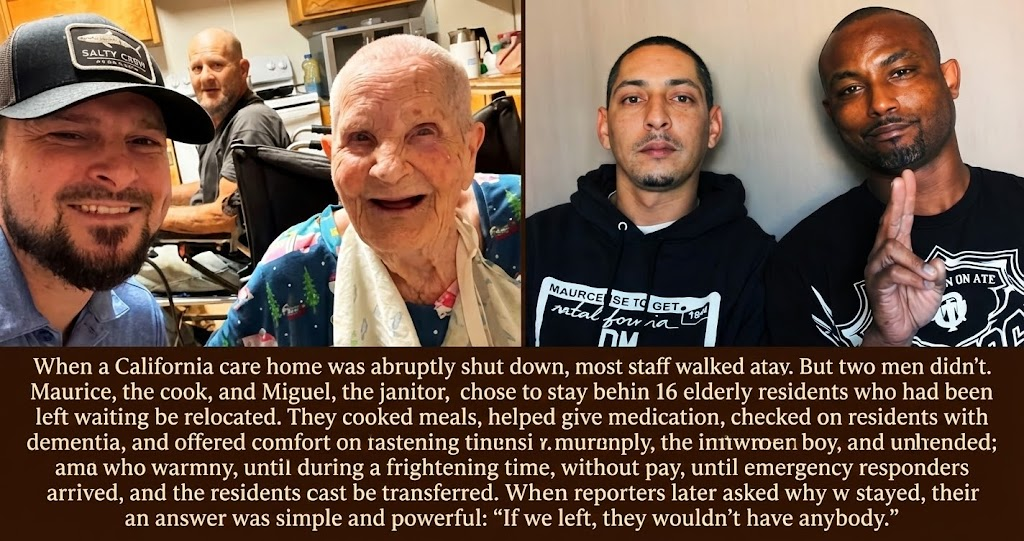
Maurice Rowland was the cook. Miguel Alvarez was the janitor. They were not nurses. They had no medical training beyond what they’d learned by watching and helping over the years. When the facility shut down, they were told they were no longer employed. No paycheck. No obligation. No requirement to return. They could have walked away like everyone else did. But when they looked around at the residents—confused, frightened, unable to advocate for themselves—they couldn’t bring themselves to leave. They saw people, not job descriptions. So they stayed. Not for hours. For days.
Each morning, Maurice went into the kitchen and cooked whatever food was still available so no one would go hungry. He made simple meals, adjusting for those who struggled to eat, making sure everyone had something warm. Miguel cleaned rooms, took out trash, checked hallways, and helped residents move safely when they needed assistance. He checked on those who couldn’t call for help, gently reassuring them when anxiety set in. Together, they kept track of medications as best they could, made sure beds were clean, and offered human presence in a place that had become frighteningly empty. At night, when the building went dark and quiet, they stayed inside—because leaving meant abandoning people who couldn’t protect themselves.
The days blurred together. There were no supervisors to call, no guarantees that help was coming soon. Maurice and Miguel slept lightly, always listening, always ready to respond if someone cried out. Fear crept in, but responsibility outweighed it. These residents had trusted the facility with their lives, and now the only people left were two men whose job titles had never included heroism. Yet they showed up anyway. Not because anyone was watching. Not because they expected recognition. But because compassion doesn’t clock out when paychecks stop.
Eventually, emergency responders and social services arrived. They were stunned to find all sixteen residents safe, fed, and cared for. One by one, the residents were relocated to appropriate facilities, reunited with families or placed under proper supervision. Only after the last resident was safely transferred did Maurice and Miguel finally leave the building. Exhausted. Quiet. Unassuming. When asked later why they didn’t walk away like everyone else, Maurice answered without drama, without hesitation: “If we left, they wouldn’t have anybody.”
That sentence says everything. In a world that often measures worth by job titles, uniforms, or pay scales, these two men reminded us what real responsibility looks like. No cameras followed them. No speeches were prepared. But their choice mattered more than they will ever fully know. They proved that heroes don’t always wear badges or scrubs. Sometimes they carry mops and ladles—and hearts big enough to stay when the world walks away.